
Embodied Psychotherapy
Jacob’s slump appeared as he shared the moment this morning when his four-year-old daughter’s antics pushed him to a familiar response. He turned and shouted, instinct choosing his reaction. As he recounts this I watch the flush run up his neck. His arms clench, adrenaline here. A small tremor visible in his fingers. His voice lifts again, directed at himself now. “I’ve read the parenting books, I’ve been to therapy before. I understand exactly why this happens. Why can’t I get myself to stop?”
Jacob’s a great dad, I can tell. His eyes brighten as he speaks of his daughter, his love for her clear. He can tell you exactly the kind of parent he wants to be, exactly where his own wounds came from, exactly how his childhood mapped onto his nervous system and why certain moments with his children light a fuse he can’t seem to control. He understands all of it with the kind of precision that comes from years of genuine work.
And he sits across from me carrying both: the knowledge of exactly why it happens, and the acknowledgement that insight hasn’t been enough to stop it.
He turns to me now, the desperation leaking from his eyes. “I need to learn to manage my anger. Can you help?”
“No.” I reply, smiling. “But I can help you embody it.”
It’s 2026 and we have gone entirely into our heads. We pedestal intelligence, the billions pouring into AI one visible proof. And with that pedestaling comes an assumption we’ve never quite examined: that intelligence lives in cognitive processing. That the body is just the car that drives the brain around.
We maintain it so it doesn’t break down. We feed it, rest it, occasionally take it to the gym. But the real intelligence, the part that perceives and decides and knows: that must live upstairs. The thinking mind is the part of us we’ve been taught to trust.
There’s a large flaw in this assumption: It’s just not true. And it’s costing us.
Your enteric nervous system, the one wrapped around your gut, contains roughly 500 million neurons that communicate bidirectionally with your brain via the vagus nerve. Your fascia, which we spent decades treating as inert connective tissue, is now understood to be a densely innervated sensory organ, registering experience and sending signals. Your proprioceptive and interoceptive systems are running continuous data about your position in space, your internal state, your readiness and resistance, your pull and your aversion, all of it moving toward your brain constantly, below the threshold of conscious thought.
Simply put: Your body is not the car. Your body is the rest of your brain.
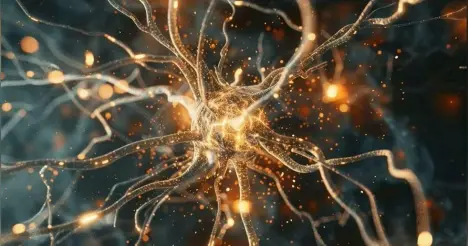
This is the architecture of confirmation bias. Of flawed perception. Of the self-fulfilling prophecy that keeps returning you to the same life no matter how much you understand about it.
The assumption that all the intelligence we need lives in our minds closes us off from the intelligence available in the space between us and another person. In a relationship. In a room.
In the specific quality of a moment that the body can feel and the mind, left alone, will rationalize away. How much of reality are we actually perceiving? Less than we think. Less than we could.
For over a decade, I’ve sat across from deeply intelligent people. They can articulate the patterns of their life with remarkable precision. They understand what shaped them, how their family system worked, why they respond the way they do. They’ll articulate their anger, sadness, hurt, and they’ll do it voice composed and mostly steady, giving me the information of their experience the way you’d give someone directions.
And then they’ll share the deep frustration about how they can’t seem to change. They understand everything, and yet nothing shifts. They know what they want and they can’t reach it.
This is not a failure of intellect. It is a consequence of disembodiment.
Insight and understanding can be real and helpful, but they live above the level where the encoding happened. If the arc of sensation stops at the difficult part, that incomplete version is what gets encoded. The learning is not just incomplete. It’s actively faulty. This is how we come to experience anger as dangerous. Grief as something to survive rather than move through. Sadness as evidence that something is wrong. Change as a threat. This is not a poetic distinction. It maps directly onto what neuroscience calls memory reconsolidation — the brain only updates a learned response when an experience is processed all the way through to a new outcome. We have only ever felt the first part of the arc, and we encoded it as the whole story. Then we built coherence around that and called it ‘being logical’.
Sarah arrives in my office with that particular mixture of empowerment and anxiety that comes after leaving a shitty relationship. She’s heady with newfound clarity, sharing with a fresh confidence the ways her last relationship failed her. She can describe it with precision: the ways she was talked down to, the moods she was constantly tiptoeing around, the lying by omission because his reactions were so unpredictable, the slow erosion of her own self-trust. She sees it now. She is not in denial. She is smart and self-aware and deeply committed to not repeating this.
The anxiety? She keeps being drawn to the same kind of man.
She can see that too. She tells me, with a kind of exhausted bewilderment, that the men who interest her, who she continues to pursue, are always some version of what she just left.
She doesn’t need more insight into the pattern. She needs to rebuild her capacity to receive the fullness of her intelligence accurately. In a relationship where her own perceptions were consistently overridden, where she had to ignore the signals her body held in order to survive the dynamic, she learned to stop listening to herself. Her proprioceptive awareness, her felt sense of a situation, the somatic signal that says something is off here, got trained out of her, dismissively called “emotional.” Her body learned a scrambled version of the intelligence signal, and her mind, running on that scrambled data, keeps arriving at the same conclusions.
This is what I mean when I say we have gone all head.
It isn’t just that we’re out of touch with our emotions or that we carry stress in our bodies without knowing it, though we often are and do. It’s that we are operating with a drastically diminished dataset and calling it reason. We are making decisions, forming beliefs, constructing entire lives on partial information, and the partial information feels complete because we’ve lost access to what’s missing.
But here’s where I want to be completely honest.
I’ve been presenting the argument for embodiment through the lens of intelligence: accuracy, perception, better data, clearer decisions. And that holds. Antonio Damasio studied patients with damage to the part of the brain that integrates bodily feeling with decision-making and found that intact reasoning, intact IQ, intact logic produced catastrophically bad decisions when the somatic signals were missing. Disembodied logic is not neutral. It’s degraded. This is mechanism, not metaphor.
But making the argument this way is still a concession to the hierarchy I’m trying to dismantle. We’re still inside the framework we’re trying to question It’s saying: by the metric you already respect, your current approach is failing you. It’s still holding intellect as the ultimate way of being. And that’s useful. It opens a door. But it isn’t the whole truth.
The whole truth is that intelligence was never the point.
We have been so starved of an embodied experience of life, so long, so thoroughly, that we built entire value systems around the consolation prize. We made intelligence the thing to pursue because it was what we had left when we left the body behind. We optimized what we could still access. We got very, very good at it, and called that being logical. Being logical became identity, and identity is always something to protect. The argument for intelligence doesn’t just live in our heads. It lives in our sense of self. Which is exactly why it’s so hard to put down.
What embodiment actually allows for is aliveness. Not as a reward for doing the intellectual work correctly, not as a feeling you earn by finally understanding enough, but as the ground state of a system that is actually in contact with itself and with the world. The full, multi-dimensional experience of being a human being in a body in a world that is constantly offering you more experience, more texture, more contact, more life than a disembodied mind can receive.
Intelligence without aliveness is sophisticated management.
Aliveness is when the system is finally, fully, here.

You can observe your internal experience from a safe distance and call it awareness, it will sound like presence from the outside. It isn’t. Detached witnessing is still a prefrontal activity. It keeps the difficult material at arm’s length, examines it, and reports back.
Full embodiment requires presence that runs all the way down. It is the capacity to take something in, feel it in your sensory system, in your tissues, in the shifting quality of your breath, in the weight of your limbs, in what happens in your back and your gut and your chest, and stay with it, slowly, without resolving it prematurely. Without intellectualizing it back into safety. Without performing it into catharsis.
It requires slowing down. It requires staying with. It requires following the arc.
When sensation is allowed to move, when the full cycle of communication completes, something genuinely different happens at the cellular level. Signals reach the brain that weren’t reaching it before. The nervous system updates. The fascial holding patterns receive new information. The encoding actually changes. You don’t just feel something. You learn something new in the part of yourself where learning actually sticks.
Embodiment is not a dance you perform for an Instagram reel. It is not shaking or stretching or a specific protocol of movement. It is not a specific posture to a specific emotion.
It’s what Jacob is learning. Not to manage his anger but to be connected to it without being consumed by it. Not to understand it better but to feel it all the way through, so that the arc completes and the encoding updates and the man who loves his children more than anything has access in the moment to the new way of being he already knows It’s what Sarah is learning too. Not to choose better with her mind but to feel more accurately with her body. To rebuild the signal that got trained away. To trust what she knows before her mind has had a chance to talk her out of it.
It’s the difference between a mind running on its own, looping through the same incomplete encodings, constructing increasingly sophisticated explanations for why nothing changes. And a whole system, in communication with itself, able to take in the full complexity of an experience and learn from all of it.
It is the difference between knowing your life and living it.
It’s the difference between being intelligent and being fully alive.